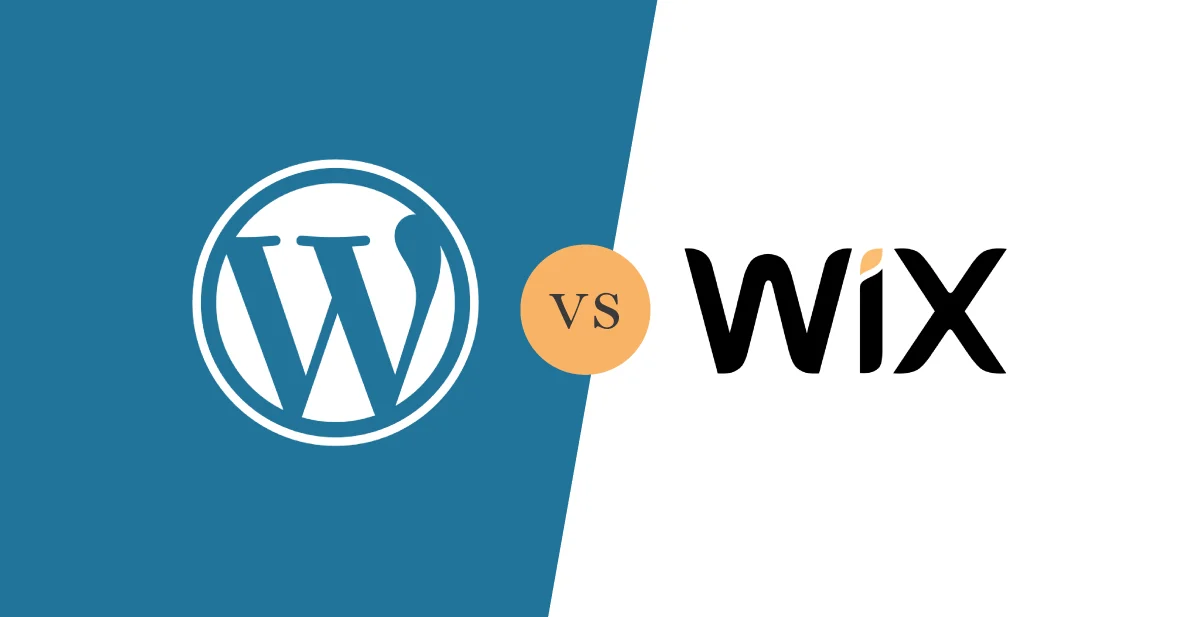
If you’ve been looking into getting a website for your business, you’ve almost certainly come across both WordPress and Wix. They’re two of the most popular website platforms in the world, and the question of which one to use comes up constantly.
The honest answer is: it depends. But not in a vague, unhelpful way. It depends on some very specific things about your business, your budget, and — most importantly — who’s going to be looking after your site once it’s live.
Here’s a straightforward comparison to help you work out which is the right fit.
What They Actually Are
Before comparing them, it’s worth understanding what each platform is and how they work differently.
Wix is a hosted website builder. Everything is bundled together — the software, the hosting, the templates, the editor — all managed by Wix. You log in, drag and drop, and build your site within their system. You don’t need to think about servers, software updates, or technical infrastructure. Wix handles all of that.
WordPress (specifically WordPress.org, the self-hosted version) is an open-source content management system. It’s software that runs on a web hosting server and powers your website. It’s far more flexible than Wix — but that flexibility comes with more moving parts to manage. Updates, hosting, security, and backups need to be handled — either by you or by someone looking after your site.
Where Wix Wins
Ease of getting started. If you want to build a basic website yourself with no technical knowledge, Wix is genuinely easier to get up and running. The drag-and-drop editor is intuitive, the templates are decent, and you can have something live quickly.
Everything in one place. Because Wix bundles hosting, software, and support together, there’s one bill to pay and one place to go if something breaks. For a very small business with simple needs and no technical support, that simplicity has real value.
No software updates to manage. Wix handles all platform updates automatically. You never need to think about keeping the software current.
Where WordPress Wins
Professional results. WordPress gives designers and developers far more control over how a site looks and functions. The gap between a professionally built WordPress site and a Wix site — in terms of design quality, performance, and flexibility — is significant. If you want a site that genuinely reflects your brand and stands out from competitors, WordPress is the stronger platform.
Better for SEO. WordPress has long been the preferred platform for search engine optimisation. The tools available — particularly plugins like Yoast SEO or Rank Math — give much finer control over how your site communicates with Google. For a business that wants to be found locally, this matters.
Scalability. Your business will grow and change. WordPress grows with you. Need a booking system? An e-commerce shop? A members area? A job board? WordPress can handle all of it. Wix’s flexibility has improved, but it still has meaningful limitations compared to WordPress when requirements get more complex.
You own everything. With WordPress, your website and all its content sits on hosting you control. You can move it to a different host, hand it to a different developer, or make any changes you like. With Wix, you’re tied to their platform. If Wix changes its pricing, discontinues a feature, or closes entirely, your options are limited.
Performance. A well-built and properly maintained WordPress site will typically load faster than a comparable Wix site. Site speed matters for Google rankings and for the experience of visitors landing on your page.
The Hidden Cost of DIY — On Either Platform
Here’s something both platforms have in common: they’re both marketed as easy to do yourself. And for very basic sites, that’s partially true.
But “easy to build” and “easy to build well” are very different things.
A DIY Wix or WordPress site built without design experience tends to look exactly like what it is — a DIY site. Fonts that don’t quite work together, layouts that look cramped on mobile, pages that are hard to navigate, copy that doesn’t sell. These things don’t just affect how your site looks — they affect whether visitors trust your business enough to get in touch.
The other thing neither platform advertises prominently is the ongoing work. Wix handles its own platform updates, but you still need to keep your content current, respond to enquiries through your contact form, check that things are working, and actively maintain your Google presence. WordPress requires more active technical maintenance on top of all of that.
For most small business owners, the time this takes is time they don’t have — and don’t want to spend.
So Which Should You Choose?
Choose Wix if: You’re an early-stage business on a very tight budget, you genuinely want to build and manage the site yourself, and your needs are simple and unlikely to grow significantly. Go in with realistic expectations about the result.
Choose WordPress if: You want a professional result that properly represents your business, you care about being found on Google, you anticipate your website needs growing over time, and — crucially — you’re going to have someone look after it properly rather than leaving it to fend for itself.
For the vast majority of small businesses I work with, WordPress is the right choice. Not because Wix is bad, but because the combination of professional design, SEO capability, and long-term flexibility makes it the better investment — especially when the technical side is handled for you as part of a managed service.
The Question Behind the Question
When small business owners ask me “WordPress or Wix?”, what they’re usually really asking is: “How do I get a good website without it becoming a headache?”
The platform matters less than whether it’s built well and looked after properly. A professionally built, well-maintained WordPress site will outperform a neglected one every time — and it will certainly outperform a half-finished DIY Wix site that nobody has touched in two years.
If you want a website that works for your business — one that looks professional, shows up on Google, and doesn’t cause you problems — the platform is the starting point, not the whole answer.
Want to Talk It Through?
If you’re weighing up your options and not sure which direction makes sense for your business, I’m happy to have a straightforward conversation about it. No pressure, no jargon — just an honest chat about what would actually work for you.
Get in touch and let’s talk about what your business needs.
I provide WordPress website builds, hosting, and ongoing maintenance to small businesses in Leicestershire. Clients get a personal, reliable service from someone they can actually call.